


In Hong Kong, a fast-paced, fiercely competitive city, the parenting challenges parents face most often aren't children refusing to study, but their struggles to sit still, stay focused, and get their homework done without putting it off.,or even“Loses their temper at the slightest thing and has wild mood swings.”
When faced with these situations, parents in Hong Kong often react by asking, “Does my child need more tutoring?” or “Are they under too much academic pressure?” Some even wonder whether their child has attention deficit hyperactivity disorder (ADHD). So they start taking their children to counseling and behavioral therapy sessions, or buying piles of attention-training exercises without knowing whether they will help.

However, in recent years, leading international research in neuroscience and medicine (published in prestigious journals such as Nature and Cell) has revealed a startling truth:Children’s emotional outbursts, hyperactivity, and trouble focusing may stem not from their brains, but from their “gut”!
This is one of the hottest cutting-edge concepts in medicine in recent years—“Gut-Brain Axis”. Today, a professional dietitian unveils the overlooked “second brain” for parents across Hong Kong, explaining how diet can quietly hijack your child’s brain and emotions.
What is the “gut-brain axis”? Why is the gut called our “second brain”?
In the past, we always thought of the brain as the body's supreme commander, sending instructions to all its organs, while the gut was merely a "factory" responsible for digestion and waste elimination. But modern neuroscience has overturned this traditional view.

1. Your gut's nervous system is larger than you think
The lining of the human intestine is densely covered with more than 500 million neurons(Neurons). This independent neural network is known in medicine as the "Enteric Nervous System (ENS)."
Its complexity and number of neurons are second only to those of our brain, far surpassing even the bone marrow and peripheral nervous system. This is why the gut is widely recognized as our “second brain.”
2. The Vagus Nerve: A "Two-Way High-Speed Railway" Between the Brain and Gut
There is a direct information superhighway between the brain and the gut, calledVagus Nerve (Vagus Nerve). This nerve acts like a two-way communication cable, transmitting signals from the brain to the gut 24 hours a day while also relaying information about the gut’s condition back to the brain.
Medical Breakthrough: 在迷走神經的資訊傳遞中,高達 80% to 90% of signals travel "upward" from the gut to the brain, while only 10% to 20% travels "downward" from the brain to the gut. This means the second brain (the gut) has a far greater influence on the first brain (the brain in our head) than we ever imagined!
Revealed: How Gut Microbes Control 3 Key Neurotransmitters in Children
To understand why poor gut health can make children distracted and irritable, we need to get to know the tens of trillions of microorganisms living in their gut—Gut Microbiota (Gut Microbiota)。
These gut microbes do more than help with digestion—they also play a behind-the-scenes role in the brain's production of neurotransmitters. The following 3 key substances that influence children's learning and emotions are all strongly affected by gut microbes:

1. Serotonin — The Hormone of Happiness and Stability
Serotonin helps regulate mood, sleep, appetite, and impulse control. When children have adequate serotonin levels, they tend to be emotionally stable, patient, and less likely to cry or throw tantrums when frustrated.
-
Take Control of Your Gut: 全身有高達 90% of serotonin is produced in the gut, with only about 5% found in the brain. Beneficial gut bacteria (such as Lactobacillus and Bifidobacterium) can stimulate intestinal cells to release serotonin. If there are too many harmful bacteria in the gut, serotonin production can become depleted, making children anxious, irritable, and prone to throwing tantrums whenever things don't go their way.
2. Dopamine — The Source of Focus and Motivation
Dopamine regulates the brain’s reward system, giving children the motivation to complete a task. One of the core mechanisms underlying attention-deficit/hyperactivity disorder (ADHD) is disrupted dopamine signaling in the brain.
-
Gut Control: 全身約有 50% of dopamine is synthesized in the gut and its surrounding neural networks. Certain gut bacteria (such as Bacillus and E. coli) can directly synthesize dopamine precursors. When the gut microbiome is out of balance and dopamine levels are low, children's brains cannot maintain sufficient stimulation during class or homework, leading to distractibility, absent-mindedness, and restlessness.
3. GABA (gamma-aminobutyric acid) — The Brain's Natural Calming Agent
GABA is the brain’s most important inhibitory neurotransmitter. It acts as a brake, calming overactive nerve cells.
-
Gut Control: Beneficial gut bacteria (such as certain strains of Bifidobacterium) produce large amounts of GABA as they metabolize dietary fiber, helping calm the brain through the gut-brain axis. In children who lack GABA, nerve cells in the brain become overexcited and cannot filter out background noise, resulting in what is commonly described as "hyperactivity, distractibility, and difficulty thinking deeply."
How Does a Hong Kong-Style Diet Gradually Destroy Children's "Second Brain"?
Gut microbiome imbalance among children in Hong Kong is particularly severe compared with elsewhere in Asia and around the world. This is closely linked to the distinctive eating habits and pace of life of Hong Kong families.
In clinical practice, dietitians have found that Hong Kong parents commonly make these 3 dietary mistakes when caring for their children, putting the "gut-brain axis" at risk:
1. The Vicious Cycle of "Cheap Dopamine": A Diet High in Sugar and Refined Carbs

After school, primary school students in Hong Kong often snack on egg waffles, Hong Kong-style waffles, siu mai, or bubble tea, or have pull-apart bread rolls or pineapple buns for breakfast.
These foods are high in sugar and refined starches, which can triggerBlood Sugar Rollercoaster (Blood Sugar Rollercoaster). When blood sugar rises rapidly, the brain briefly gets a large surge of dopamine, making children unusually excited (Sugar High). But this is followed by a surge in insulin release that causes blood sugar to plummet (Sugar Crash). At this point, the brain is severely deprived of glucose, and children becomeExtremely anxious, unable to focus, irritable。
Worse still, a high-sugar environment is the perfect breeding ground for harmful microbes, such as Candida. Once they take over the gut, they send signals to the brain through the gut-brain axis, making children crave even more sugar and trapping them in a vicious cycle.
2. The "Sterile" Myth: Overreliance on Antibiotics and Antibacterial Products
Hong Kong parents tend to be very hygiene-conscious, and after living through various outbreaks, they have become accustomed to using a range of chemical disinfectant sprays. When children develop a cold or sore throat, some parents or doctors tend to useAntibiotics (Antibiotics)。
Antibiotics are indiscriminate "nuclear bombs": while killing disease-causing bacteria, they also wipe out more than 90% of the beneficial bacteria in the gut. Medical research indicates that a single course of powerful antibiotics during childhood may leave the gut microbiome needing months or even years to regain its balance.
Leaky Gut Syndrome and Brain Inflammation: When all the beneficial bacteria die off, the tight junctions in the intestinal lining break down, creating tiny gaps. Large food molecules, undigested toxins, and endotoxins (LPS) from harmful bacteria can then leak into the bloodstream, triggering chronic inflammation throughout the body. When these inflammatory factors cross the blood-brain barrier (BBB) and enter the brain, they triggerNeuroinflammation (Neuroinflammation), with clinical symptoms including reduced attention, brain fog (Brain Fog), and hyperactivity.
3. The Proliferation of Ultra-Processed Foods (UPF): The Hidden Toxic Effects of Preservatives and Artificial Colors
Sausages, luncheon meat, cup noodles, packaged snacks, brightly colored candy… these are all very common in Hong Kong households.
These ultra-processed foods contain large amounts ofEmulsifiers (Emulsifiers)andArtificial preservatives。Emulsifiers act like dish soap, stripping away the mucus layer that protects the intestinal wall and allowing harmful bacteria to directly damage intestinal epithelial cells.
In addition, the American Academy of Pediatrics (AAP) has long warned that certain artificial colors (such as Tartrazine and Allura Red) directly interfere with neurotransmission in the brain, worsening hyperactivity and inattention in children.
A Dietitian’s “Gut-Brain Reset Formula”: 3 Steps to a Sharper, More Focused Brain

To address children's distractibility and bad tempers, parents should stop simply scolding them for "not listening." We need to tackle the root cause by using the "Gut-Brain Reset Formula" to give children's second brain a thorough cleanout. Registered dietitian Christy recommends 3 steps parents can take to build a sharp, focused brain:
Step 1: Follow the "Real Food" Rainbow Diet (Results in 72 Hours)
Stop buying ultra-processed foods and base your daily diet on unprocessed whole foods.
-
Add prebiotics: Prebiotics feed beneficial bacteria. Eat more onions, garlic, bananas, oats, asparagus, and wood ear mushrooms.
-
Rainbow Fruits and Vegetables: 每天食 3 種不同顏色的蔬菜。蔬果中的植化素(Phytochemicals)和膳食纖維,是培養多樣化腸道菌群的最佳土壤。
Step 2: Dopamine Fasting and Outdoor Activities
Alongside dietary changes, children’s time spent watching short videos and playing video games must be strictly limited (no more than 1 hour per day). Encourage children to spend more time outdoors, getting their feet in the dirt and connecting with nature. Naturally occurring microorganisms can enrich children’s microbiomes through breathing and physical contact, while physical activity helps stabilize GABA release in the brain.
Step 3: Medical-grade precision brain nutrition to support Hong Kong children's focus and development during their critical growth years

Highly recommended by nutritionist Christy OKAMI The Daishin Series: OKAMI pioneers the integration of cutting-edge neuroscience into everyday dietary supplements. Designed for Hong Kong schoolchildren facing heavy academic workloads and intense mental demands, its two flagship formulas specifically target the brain’s prefrontal cortex and neural signaling networks to support brain and digestive development:
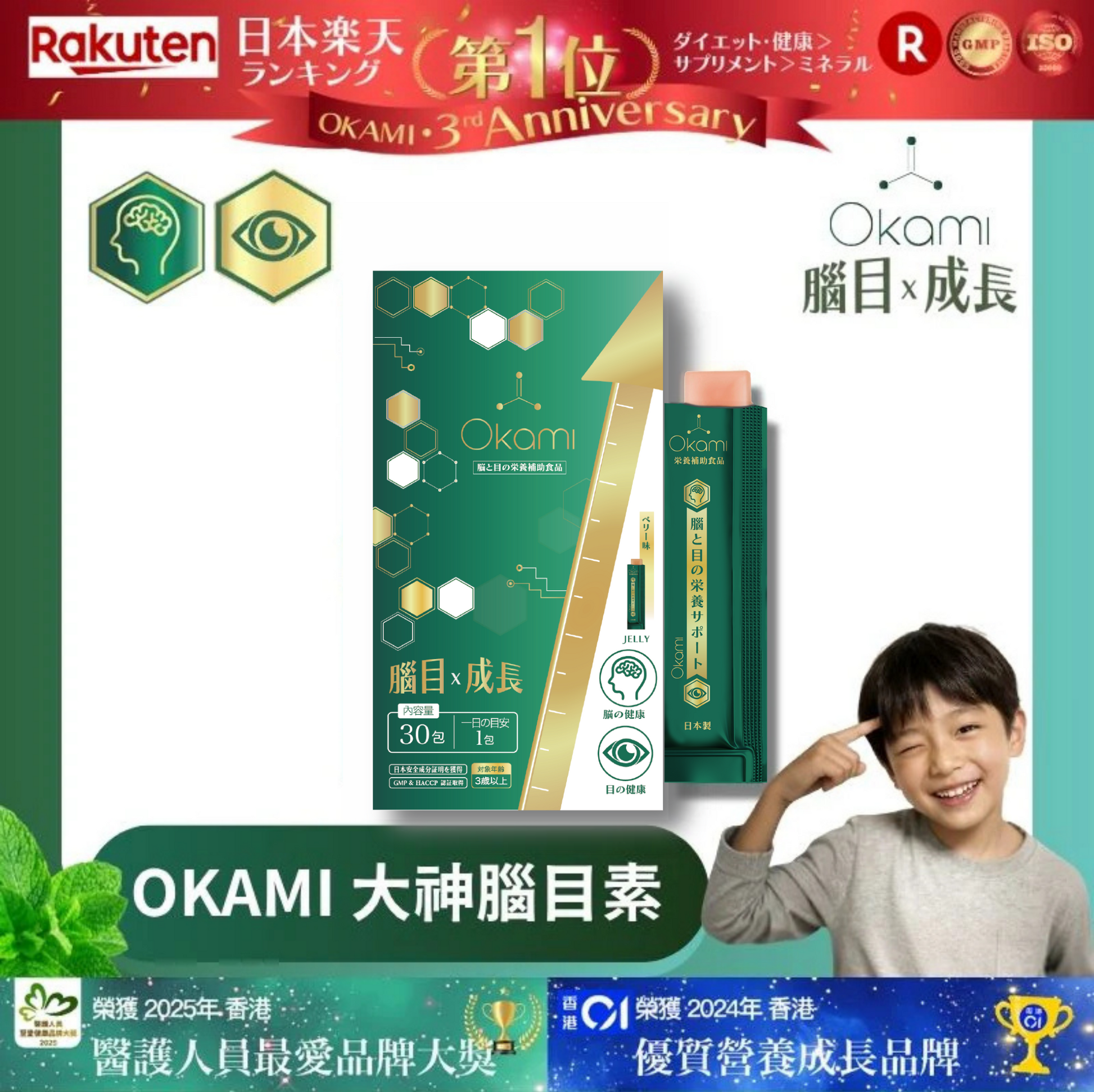
OKAMI Brain & Eye Supplement
Shop Now: 大神 Brain & Eye Formula Focus and Brain Health Collection →
Kids with sharp visual skills think twice as fast!OKAMI Opti-Brain(EyeQ-Sync™) Break through the limitations of conventional brain-only supplements with the first-ever "Triple Eye and Brain Protection Science" synergy. In "visual acuity"on, using an ingredient with 6 times the eye-protecting power of blueberriesBilberry Extract (Bilberry)* and patented FloraGLO® Marigold ExtractForms a macular barrier, blocks 90% of blue light from electronic devices, and promotes rhodopsin regeneration, working together toCentella Asiatica ExtractRepair nerves and improve signal transmission between the brain and eyes.
In "Brainpower"Up,infused with high-purity α-GPC 93% to instantly boost brain signaling and support growth hormone secretion, combined with ProtyGold peptides and bacopa, clinically proven to increase BDNF (brain-derived neurotrophic factor) and improve learning efficiency by 40%, to eliminate mental fatigue and slow responses. Finally, to target "focus and memory," L-Theanine promotes alpha brain waves to help children enter a "relaxed yet focused" state, while spearmint extract consolidates long-term memories so they do not forget what they have learned after a night's sleep. Premium bird's nest extract rich in sialic acid deeply nourishes nerves, delivering three-in-one support for eye health, brain function, and growth!
OKAMI 大神 Growth & Immune Support Gel
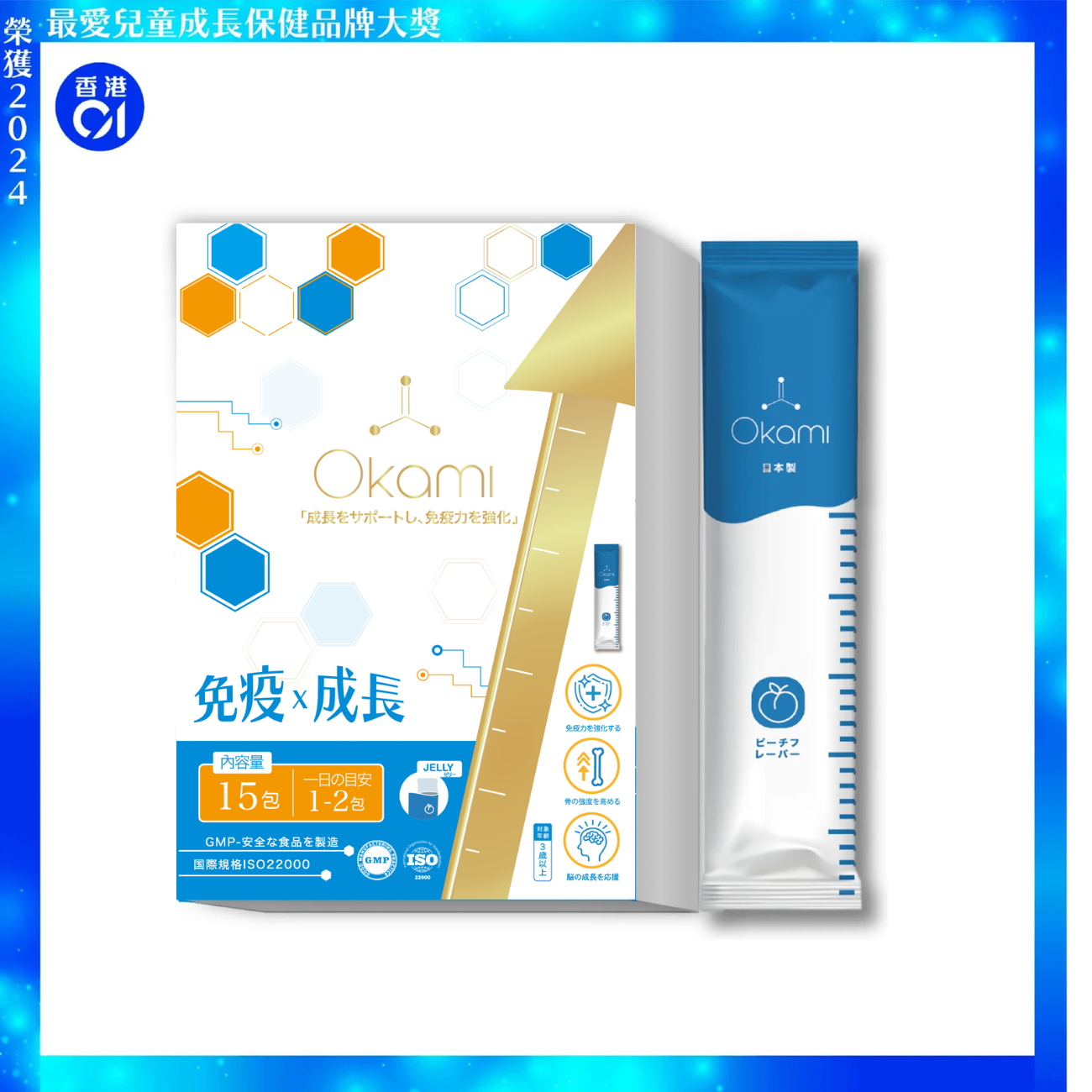
Many parents struggle to support their children’s brain nutrition because fish oil tastes too fishy and pills are hard to swallow. OKAMI Growth & Immunity Jelly solves this problem with a delicious 6-in-1 nutritional snack formulated to support height growth and immune health.
The newly upgraded formula combines L-Vita’s premium blend of 7 growth-supporting amino acids for height growth and immune support with an α-GPC brain-support formula. It stimulates the pituitary gland to release natural growth hormone and promotes the development of neural networks in the brain, while fueling the body’s growth. The formula also features a precisely balanced blend of highly absorbable calcium lactate, konjac, and lactic acid bacteria to strengthen the intestinal barrier and support the gut-brain axis. It delivers 8 essential vitamins (vitamins A, B1, B2, B6, C, D3, E, K) for comprehensive support for bone growth, immune defenses, and brain development—helping children make progress in all three key areas of development while enjoying a delicious snack!
Children’s brain development and neuroplasticity progress most rapidly during the critical window before age 12. Once this window closes and brain networks become established, addressing attention and emotional issues becomes twice as difficult. Rather than facing daily parent-child conflicts over schoolwork, team up with grandparents and caregivers today to address overlooked issues in everyday care and introduce OKAMI’s medically supported brain development supplement for children. With precisely targeted, science-based nutrition, help your child build a foundation for focus, intelligence, and emotional resilience in today’s distracting digital world!


