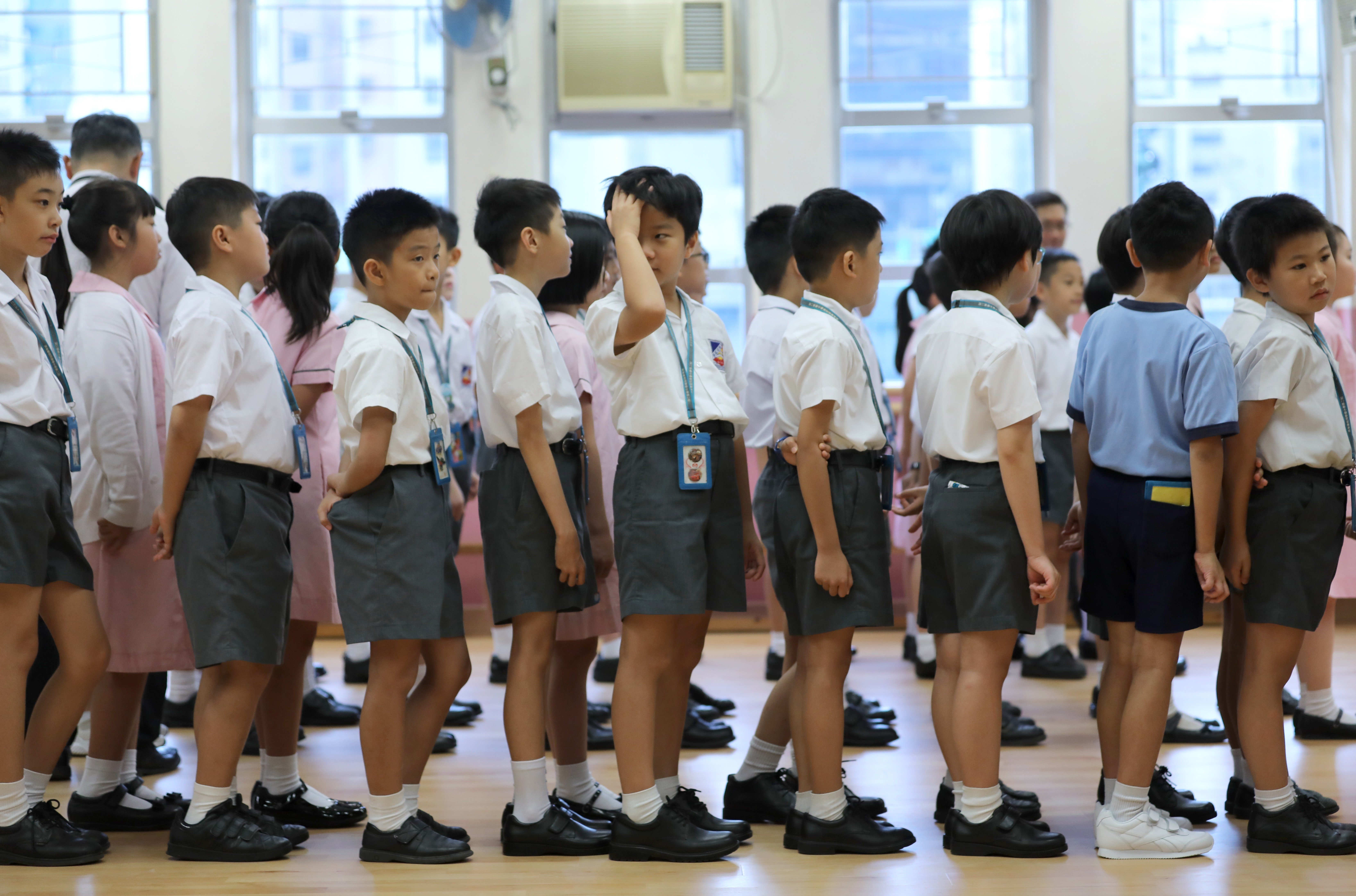
 Every September, the start of the school year presents a major challenge for many Hong Kong parents. Children transitioning to a new stage of education are particularly likely to struggle with the adjustment, whether they are Primary One pupils leaving kindergarten behind and entering primary school, or Secondary One students moving up from primary school and facing all-English instruction and a heavy homework load.
Have you noticed your child suddenly becoming irritable, struggling to sleep at night, or having trouble waking up in the morning just before school starts? Or, once classes begin, do teachers frequently report that your child often "zones out" in class, takes forever to finish homework, and is easily distracted and unable to concentrate? These are all very typical signs ofBack-to-School BluesPerformance.
When children face changes in their environment and growing academic pressure, constant nagging or criticism from parents often only makes things worse. This article will give you an in-depth look atBack-to-School Bluesthe reasons behind it, and provide parents with 5 expert-backed ways to effectivelyBoost focuspractical ways to help children navigate the adjustment period and rediscover their enthusiasm for learning!
1. What Is "Back-to-School Syndrome"? Common Symptoms in Children Starting Primary or Secondary School
Back-to-School Blues(Back-to-School Anxiety) is not a clinical mental disorder. It refers to a range of psychological, emotional, and physical adjustment difficulties children experience when the holidays end and they return to the structured, often stressful routine of school life.
1. Preparing for Primary 1: Challenges of the Transition from Kindergarten to Primary School
For those who have just experiencedGetting Ready for Primary 1For children, kindergarten and primary school follow very different approaches. Kindergarten focuses on play, stories, and interactive learning, while primary school requires children to sit still for long periods, follow instructions, observe classroom rules, and handle daily homework and tests across multiple subjects. This sudden change often causes intense separation anxiety and fear among children starting Primary 1.
2. Adjusting to Secondary School: A Sharp Rise in Environmental and Academic Pressures
For those experiencingTransitioning to Secondary School For teenagers, the challenges shift to changes in their social circles, more school subjects (such as social studies and science), a switch in the language of instruction (such as all-English instruction in English-medium secondary schools), and the physical changes of adolescence. At this stage, children often become rebellious, spend excessive time on electronic devices, or feel low because they set high expectations for themselves or struggle to keep up with the pace of learning.
Common physical and psychological symptoms of “back-to-school syndrome”:
-
Emotional well-being: Irritability, temper tantrums, crying for no apparent reason, anxiety, lack of motivation.
-
Physical aspects: Frequently complains of headaches, stomachaches, nausea, trouble falling asleep, or recurring nightmares around the start of the school year.
-
Behavior: Gets distracted very easily when studying, takes far too long to finish homework, and loses interest even in favorite activities.
2. Getting to the Root: What Causes Children to Have Trouble Focusing?

When parents see their children getting distracted while studying, their first reaction is often, "They're not paying attention or listening." But in fact, identifying the underlyingCauses of Poor Concentration,is the key to addressing the root of the problem. Here are the three most common triggers at the start of the school year:
1. Physiological factors: Insufficient sleep and irregular sleep schedules
During long school breaks, children often follow a more relaxed daily routine. Once school starts, suddenly having to wake up earlier can lead to insufficient sleep or poorer sleep quality. Without enough rest, the brain’s prefrontal cortex, which controls attention and executive function, cannot work properly, making it harder to concentrate.
2. Psychological factors: Environmental changes and excessive anxiety
Whether it'sPreparing for Primary 1OrTransitioning to Secondary School, the uncertainty of a new environment can put children on edge. When the brain is consumed by anxiety, far fewer cognitive resources are available for learning and memory. As a result, children struggle to take in or remember what is taught in class.
3. Nerve Nutrition and “Brain and Eye Fatigue”: Blue Light Exposure and Nutrient Deficiencies
Children today inevitably use tablets and smartphones. Prolonged exposure to blue light from screens not only suppresses melatonin production and disrupts sleep but also causes eye strain. When the brain and eyes are constantly overworked and the daily diet lacks key nutrients that support nerve signaling, concentration can plummet.
3. A Must-Read for Parents! 5 Practical Ways to Improve Focus

Help children say goodbye for good toBack-to-School Blues, parents need to take a multifaceted approach that includes daily routines, mental preparation, behavioral training, and nutritional support. The following 5 practical strategies can effectively help children of different agesImprove Focus:
Method 1: Build Micro-Habits and a Consistent Routine (Ease Back-to-School Blues)
To resolveBack-to-School Blues,Adjusting your daily routine takes time. Around the start of the school year, try a gradual approach: shift your schedule 15 minutes earlier each day:
-
Consistent bedtime routine: Stop using all electronic devices 1 hour before bedtime. Instead, read picture books, listen to soft music, or spend time talking with your child.
-
Morning sunlight exposure: Letting children get natural light after waking up helps reset their body clock and improves focus during the day.
Method 2: Introduce the Pomodoro Technique for Student Time Management
Many children put off doing their homework because they feel overwhelmed by piles of assignments and don't know where to start. GoodStudent Time ManagementCan significantly ease children's emotional burden:
-
Break down the task: 将
-
Pomodoro Technique: Focus on homework for 20 minutes, then take a 5-minute break. Letting children know that focused work has an endpoint can help them learn more efficiently.
-
Set priorities: Help your child make a daily checklist, tackling the harder subjects first, then moving on to easier exercises.
Method 3: Build Children's Focus Through Everyday Games
Focus Training for ChildrenYou don't have to sit at a desk mechanically working through exercises. Incorporating practice into family games can be even more effective:
-
Visual Tracking Training: Games such as tile matching, spot the difference, and Schulte Table can help children develop eye-tracking skills and improve visual search speed.
-
Auditory Memory Training: Parents read aloud a series of numbers or words (such as apple, car, elephant, building) and ask their child to repeat them in reverse order to strengthen working memory.
-
Mindful Listening Game: Close your eyes and listen for 3 sounds around you to help your child develop selective attention.
Method 4: Create a distraction-free environment for focused learning
A good learning environment isImprove FocusThe physical basis of:
-
Clear Desk Principle: Keep only the books and stationery needed for the subject currently being studied on the desk, and put away all toys, comics, and unrelated clutter.
-
Visual Privacy: Avoid positioning your desk facing a TV or a busy hallway.
-
Lighting and Posture: Ensure adequate lighting and provide a table and chair at a suitable height to protect your child's eyesight and spinal health.
Method 5: Support Brain and Eye Health with Targeted Brain-Boosting Nutrients for Children
Beyond building and practicing good habits, nourishing the brain and visual system from within is just as important. After learning about variousCauses of difficulty concentratingAfterward, nutrition experts found that today's schoolchildren often lack the specific micronutrients needed to sustain intense mental activity. Providing children with an appropriate supplement of high-qualityChildren's Brain Health Supplements,can "fuel up" the brain at a neuroscientific level.
5. Ease Back-to-School Anxiety by Nourishing Both Brain and Eyes: OKAMI
大神 Brain & Eye Formula Opti-Brain Jelly
Helping children cope withPreparing for Primary 1OrAdjusting to Secondary Schoolin the process, many parents in Hong Kong have found that reminders and supervision alone do not keep their children from getting tired and distracted. This is especially true for today's students, who learn using digital screens every day, putting their brains and eyes under prolonged strain.
To address this challenge, specially designed for schoolchildren's intensive mental demands, OKAMI 大神 Brain & Eye Supplement Born to meet the need!

Learn More Now

OKAMI Brain & Eye Dual-Action Science-Based Gel (EyeQ-Sync™ Brain-Eye Synergy Formula)
-
Boost your brainpower: Clear mental roadblocks and tackle challenging math, logic, and commonsense reasoning problems faster, more decisively, and more accurately.
-
Deep Memory Lock: Consolidate what you learn each day, avoid wasting money on studying only to forget, and turn short-term memory into lasting skills.
-
Stabilize your mood during exams: Relieve stress and guide your brain into the optimal alpha ($\alpha$)Focus frequency helps children perform to their full potential on exams.
Ace Your Secondary School Placement and Major Exams! The "Brain and Eye Training" Strategy Top Students Use to Get Ahead
OKAMI Brain & Eye Dual-Action Science-Based Jelly (EyeQ-Sync™ Brain-Eye Synergy Formula)
- Boost your brainpower: Unclog your thinking and tackle challenging math, logic, and common-sense reasoning problems faster, more decisively, and more accurately.
- Deep Memory Lock: Consolidate what you learn each day. Stop wasting money on studying only to forget it all, and turn short-term memories into lasting skills.
- Stay calm during exams: Relieve stress and guide the brain into the optimal Alpha ($\alpha$) state for focus, helping children perform to their true potential in exams.
To help children fully clear "digital brain fog" and activate deep memory, you need to meet the needs of both the brain and the eyes3 Core Science-Backed Nutritional Elements:
1. The Brain’s “High-Speed Fiber Optics”: a-GPC and ProtyGold® Patented Peptides
Neurons in the brain communicate through neurotransmitters. One of the most important is acetylcholine, which plays a key role in memory and thinking speed.
- $\alpha$-GPC (Glycerylphosphorylcholine): A cutting-edge active ingredient for brain health, recognized by the medical community for its ability to cross the blood-brain barrier directly. Clinical studies confirm that high-purity $\alpha$-GPC can deliver choline precisely to the brain,Boosts nerve signal transmission speed by up to 2.3 times! After taking the supplement, the most noticeable change was a significant improvement in the child's ability to listen to questions, understand them, and apply what they learned.
- ProtyGold® Patented Peptide: Provides the specific amino acid building blocks needed for brain and nervous system development. Like building a highway for the brain's nerve cells, it speeds up connections between synapses, helping children quickly store knowledge in their "long-term hard drive" when memorizing history, general knowledge, and English vocabulary.
2. Induce Optimal Brainwaves for Learning: L-Theanine (Theanine) and Bacopa monnieri
Why do children struggle to settle down and stay focused when they sit down to study? It's because their brains are flooded with $\beta$ brainwaves associated with stress and anxiety.
- Natural L-Theanine: As a “natural calming agent” for the brain, it can effectively cross the blood-brain barrier,Induces the brain to produce $\alpha$ brain waves。This ideal learning state of being "relaxed yet highly focused" greatly improves children's ability to tune out distractions, helping them sit calmly for a full 30-45 minutes and get more out of their study time.
- Bacopa (Bacopa Monnieri): Traditionally revered as the “sacred brain-protecting herb,” it is commonly used in clinical medicine to improve cognitive function in children. It can significantly reduce the hidden stress of exams, preventing children from suddenly “going blank” due to nerves during a test.
3. The Macula’s “Blue Light Shield”: FloraGLO® Patented Lutein + Premium Japanese Bilberry
When your eyes are tired, your brain is tired too. To keep digital screens from interfering with learning, you need to build a powerful "light-filtering barrier" in the macula of the retina.
- FloraGLO® Patented Lutein: 全球公認的權威游離型葉黃素。其分子極小、吸收率極高,能精準在視網膜黃斑部聚集,Filters out up to 90% of harmful high-energy blue light, just like sunglasses,protecting the optic nerve at its source.
- Premium Japanese Bilberry Extract (Bilberry): Its anthocyanin content is 4-6 times higher than that of regular blueberries! It immediately boosts blood circulation in the tiny blood vessels of the eyes and promotes rhodopsin regeneration, quickly relieving dry eyes, frequent blinking, and pseudomyopia caused by prolonged tablet use for online classes.


Why are Hong Kong moms snapping up OKAMI Opti-Brain?
- Truly supports both brain and eye health: No need to buy separate eye health supplements and brain-boosting oils. A powerful blend of 9 key neuroscience and eye health ingredients helps restore memory and vision damaged by invisible blue light.
- Kids' favorite "Tasty Jelly": Say goodbye to hard-to-swallow pills and fishy-tasting fish oil! OKAMI comes in a naturally delicious jelly format that kids can't resist. Ready to eat straight from the pack, with a satisfyingly bouncy texture—just one pack a day, and kids will be asking for more.
- 100% Made in Japan, with guaranteed safety: 通Meets stringent international GMP and additive-free safety certification standards. Contains no pharmaceutical drugs, hormones, or artificial colors. Specially formulated for Hong Kong students aged 6-15 who are in a critical stage of brain development and facing the pressure of secondary school placement exams.
🌟 Real Reviews from Moms:
💬 Sha Tin District · Mrs. Chan (parent of a Primary 5 student taking internal assessments for secondary school placement): “My son used to squirm in his seat doing homework, as if he were sitting on nails. No matter how much he practiced Chinese vocabulary for dictation, he just couldn’t remember it. After hearing other parents recommend OKAMI Opti-Brain, we tried giving him one stick a day. By the second month, the biggest changes we noticed were that he was solving math word problems faster and wasn’t constantly rubbing his eyes anymore. Last month, he scored 98 on the Chinese dictation section of his secondary school placement assessment. Even his teacher praised how much his concentration had improved!”
Make the most of the critical window for early intervention—give your child a future of clear vision and quick thinking!
Hong Kong’s education system is intensely competitive. Every mark and grade in secondary school allocation assessments and major exams directly affects which secondary school a child is assigned to. Yet in this digital age, when everyone has one or two iPads or smartphones, simply pressuring children and piling on more tutoring hours only leaves them more mentally exhausted and puts greater strain on their eyes.
Smart moms know how to give their children the right “fuel for their neurons” when it matters most. Don’t let “digital brain fog” put your child at a disadvantage during exam season.
Make the most of this critical window for your child’s memory and vision development—give them the ultimate protection for their brain and eyes!